Saturday, 21 March 2026

The Liturgical Question that will not go away

Figure 1.
The celebration of Mass "ad orientem" according to
the New Missal in a French Monastic Community.

Twenty years ago, a priest of the Toronto Oratory published a book titled The Mass and Modernity : Walking to Heaven Backward. It is an excellent philosophical study and profound in its discussion of the difficulties facing the Church because of the collapse of her Liturgical praxis. EN1   The author, Father Robinson, was inspired by a celebrated phrase in one of the Sermons of Saint JH Newman on the path we take to salvation.  Father Robinson observes that Saint Newman was writing about the individual who learns the truth about faith and right conduct through the experience of error : 
He [Newman] was reminding us that, in fact, we all make mistakes about the meaning of life and how it should be lived. But things do not stop there because we then go on to act out these mistaken ideas, and this is true even if or when we are not very clear as to what exactly the ideas are. Bad practice is based on confused and false principles, and it is by an often bitter experience that we finally see the truth a bit more clearly and so find ourselves a little nearer to the Promised Land.  EN2
Father Robinson suggests that this metaphor of the path to salvation is most applicable to the intense debates about the Church's Liturgy over almost 60 years.  It would be fair to conclude that these debates (some have termed them "wars") are but one manifestation of the increasingly polarised state of the Church.  In this little essay, we cannot plumb the philosophical depths of the arguments held by each side, nevertheless observing that these philosophical differences are the substance of the disagreement.  It would be regrettable to describe this debate as political, even though it manifests itself politically and in externals. 

The current phase of these debates presents irreconcilable differences - each side deems the other to be in an indefensible situation and harming the good of the Church.  This is debated continuously and often heatedly, on the wide-world of the Web.  The subject matter is so familiar to readers, that it is unnecessary to mention the small details, but merely to make some observations. 


OPPOSING POSITIONS 
There are two opposing positions (with many variations) in this particular battle of the Liturgy Wars.  

The first position is a rejection of the notion that the Roman Rite has two forms, Ordinary and Extraordinary, since this is deemed to be contrary to the decisions of the Second Vatican Council.   EN3  The notion is to be corrected by the suppression of that form which preceded the Council (the Extraordinary Form of the Roman Rite), regardless of the confusion or scandal that might be caused in the process.  

The opposing position is that the Rites which were promulgated after the conclusion of the Council (the Ordinary Form of the Roman Rite) were an illegitimate and fraudulent exercise in ecclesiastical authority, which cast aside Tradition for misguided ideological ends; the remedy, therefore, is that those revised Rites be suppressed, regardless of the practical difficulty of doing so. 

There are loud voices making clear these two positions, but not everyone who takes an interest in these matters holds to one or the other of the two positions. Many are disturbed by the intensity in which these two positions are debated. 

The Catholic World is not divided into Defenders of Liturgical Tradition and its Opponents.  There are many debates in the Church and perhaps they are underpinned by the same divergent philosophies.  Defenders of a strict liturgical Tradition are not numerous in the sum of the Church's Faithful and they seem mainly to be voices of the Western World. The Churches of Africa, Asia and South America do not seem to be deeply involved in this particular liturgical debate and are largely content with the revised Rites which emerged after 1969.  We might be mindful that the Faithful in these continents comprise a large number of the world's Catholics. 

BUILDING UP THE SACRED 
In his instruction Desiderio desideravi, the present Bishop of Rome wished to encourage a culture where the Sacred Liturgy is celebrated with sacrality and due decorum and that the Faithful be well-formed in what takes places when they gather to celebrate the Rites of the Church. This is an admirable aspiration, which aligns with the teachings of the Second Vatican Council on the Sacred Liturgy and, indeed, the teachings of previous Popes. But, unfortunately, the same vigour with which the Holy See acts to restrict the celebration of the former Missal is not also applied to the much more numerous and widespread abuses - worldwide - in the manner of celebrating the Revised Rites. The failure to act against these abuses - some of them sacrilegious - undermines what the Bishop of Rome claims he has "desired with a great longing". 

Also detracting from claims made in Traditionis Custodes and Desiderio desideravi is a vast body of reputable scholarship discussing the development of the Revised Rites and the ideology underpinning those revisions. It is no longer credible simply to assert that the New Order of Mass is the "unique" expression of the Roman Rite, nor to claim that it is completely consonant with the Tradition of the Church's liturgical prayer and ritual gestures. It is well that these objections be understood and not be dismissed out of hand as the ravings of agitators and arch-conservatives. 

It must also be remembered, on the other hand, that for the majority of Catholics, such scholarship is not relevant to their faith-lives. The majority of Catholics are content with the state of the Church's Liturgy as they experience it each week. Some, however, are more disposed to a re-sacralisation of the Rites than others.  Priests who celebrate both forms of the Roman Rite may not have the luxury to choose one to the exclusion of the other, nor think it desirable.

MAKING THE SAME MISTAKES 
Those who are convinced that the Church is going to abandon the Revised Rites in favour of a more strict liturgical Tradition are going to be disappointed. And those who believe that they can stifle the aspirations of Faithful Catholics with authoritarian acts of ritual repression will also be disappointed. When insufficient magnanimity underpins both positions, neither can expect or deserve success. 

It is justly pointed out that the perilous speed in which the revision of the Church's principal rites was carried out in the period 1965 - 1969 was harmful to the Church. Pope Benedict, in criticising the Revisions, noted a mentality which produced a "banal product of the moment".  EN4  These insightful words have been conveniently ignored. 

In the fifty or so years since, there have been too many changes in the Liturgy for the Faithful adequately to accommodate.  A liturgical spirituality cannot be formed in a milieu of ongoing adaptations and the frequent introduction of new music and liturgical texts.  In the West, the results of this are all-too evident. Why then, would the solution be to introduce another raft of changes, aimed at reversing those revisions? Why would that be any more prudent and less disruptive? 

FEWER DOCUMENTS AND MORE REAL DIALOGUE 
A stalemate is not quite the end of the matter, however, nor is that a Christian manner of resolving disagreements. We might hope for (but not expect soon), dialogue, rather than pronouncements from on high, whilst noting that this issue did not figure at all in the opaque discussions of the much-vaunted Synod on Synodality.  At this moment, Authority is interested in only certain debates.  

Everyone who takes the view that a "Reform of the Reform" is needed, has his or her own ideas on what form that should take. Might it not be best, however, that the future of liturgical reform be taken slowly, carefully and with greater charity on all sides? Those agitating for complete suppression of the Revised Rites might take a step backwards to reflect on wider realities within the Church.  Similarly, the Holy See should allow the more ancient Rites of the Church to be celebrated without paranoid restrictions and cease the unpastoral ostracisation and misrepresentation of its adherents.  The sanctification of the Church through its Sacred Liturgy is not well-served by ideological attempts to deny realities, even with the noble motives and aspirations. We should hope and pray for a ceasefire in these Liturgy Wars.  

Over a passage of years - not even the blink of an eye in God's time - it will become obvious, more acceptable, that aspects of the Revised Rites are a product of an era which is gone and no longer enriching to the Church, or providing what is needed to draw souls to Christ.  And those who have defended (should we write "imposed"?) those Revisions so emphatically will also be gone.  A reform of the Roman Rite is necessary and desirable, but can only be attempted at a moment free from rancour.  The process of Reform should not be limited to discussions between liturgical scholars, nor should the experiences of the last sixty years  - good and bad - simply be set aside, as if they never took place.  Learning from collective mistakes and setting aside imperfect premises, such a reform might be undertaken carefully, rooted in Tradition, but with pastoral sensitivity, one cautious step at a time, and backward. 

We advance to the truth by experience of error; we succeed through failures. We know not how to do right except by having done wrong. We call virtue a mean, that is, as considering it to lie between things that are wrong. We know what is right, not positively, but negatively; we do not see the truth at once and make towards it, but we fall upon and try error, and find it is not the truth. We grope about by touch, not by sight, and so by a miserable experience exhaust the possible modes of acting till naught is left, but truth, remaining. Such is the process by which we succeed; we walk to Heaven backward. 
 Saint J.H. Newman "Parochial and Plain Sermons" Vol. 5, no. 8. 


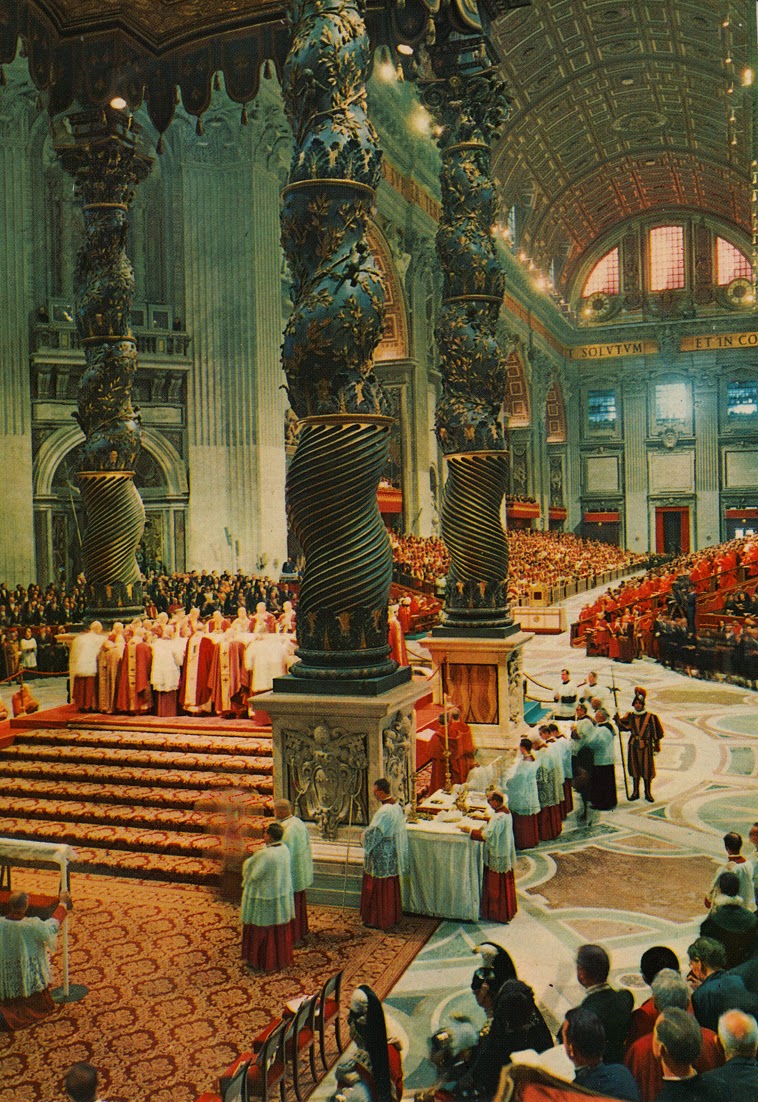
Figure 2.  A scene at the Second Vatican Council.


END-NOTES

EN1  Robinson, Jonathon, The Mass and Modernity : Walking to Heaven Backward, Ignatius Press, San Francisco 2005.

EN2  Robinson, op.cit., page 344.

EN3   The terms Ordinary and Extraordinary as applied to the Mass of the Roman Rite originated in 2007 with Pope Benedict's motu proprio Summorum Pontificum.  In this essay, we will refer to the Ordinary form as The Revised Rites since we are also discussing the revised liturgical books of the Sacraments, Episcopal ceremonies &c.

EN4  The following article is an investigation of the words written by the then Cardinal Ratzinger : https://sharonkabel.com/post/ratzinger-fabricated-liturgy/

AMDG

Friday, 20 March 2026

On the Importance of Altar frontals : part 1

Excepting perhaps for the altar canopy or civory, the most worthy, liturgical, notable and appropriate adornment of any altar is its altar frontal (antependium). More than any other adornment does the use of the antependium highlight the primacy of the altar. And yet, the antependium is the adornment most frequently lacking from our altars. 

The Altar of the Confession in Saint Peter's Basilica
Pope Benedict is seen here offering Mass on Pentecost 2008.
This marvellously embroidered frontal in crimson red and gold
frequently clothes this altar for Papal Masses.

The Rev'd JB O’Connell speaks of the symbolism of the antependium:

As the early linen clothing of the altar recalled our Lord’s burial shroud, so the precious fabric of the later frontal is to recall his royalty....The clothed altar with its beauty and changing colours is a symbol of the Mystical Body - the whole Christ, Christ united with all his saints - it translates this doctrine into the language of colour and form. In addition to its symbolical value, the frontal - with its sequence of colours and its changing form and decoration - lends variety and new beauty to the altar, and helps to mark the degrees of festivity in the Church’s liturgy. Because of its function as an adornment of the altar - although not its primary purpose, which is its symbolism - some liturgical writers maintain that its use is not obligatory, by custom, if the altar is itself made of precious material and highly decorative. But if the frontal is not used, not only is its symbolism disregarded, but the altar is without change of permanent adornment, degrees of festivity cannot be adequately expressed, nor can the liturgical changes of season or feast be fully indicated. 

J.B. O’Connell, Church Building and Furnishing: the Church’s Way, pp.188-89.


The use of the antependium has been a continual practice in the basilicas of Rome.
To this day, the Altar of the Confession in S’ Peter’s Basilica
is clothed with an antependium during the Papal Masses.
Shewn in this image is one of the elaborately-worked antependia used in Saint Peter's.

It may also be observed that many altars of no particular artistic merit, and especially altars which are simply supported on two or four pillars and lack a solid panel underneath the altar table, can be particularly enhanced by the use of an antependium. 

Until 1960, the Rubrics of the Roman Missal and the directives of the Ceremonial of Bishops required that altars, but specifically high altars be clothed with an antependium: it was not a matter of choice or dependent upon the beauty or otherwise of any given altar.  Unhappily, however, the directives were largely ignored.  Recognising this failure, the revised rubrics of the 1960 Missal omitted the sentence which required the use of an antependium, although maintaining that rubric which required the antependium to be changed according to the season or festival.  

The altar in Saint Peter's without an antependium.
The altar is of surprising plainness, indicating that it was
intended that the central altar of Christendom
would always be clothed for Mass.


Even after the requirement for an antependium had been relaxed by the revised rubrics of 1960, the American scholar of canon and liturgical law Father Frederick McManus (who was to become prominent amongst the liturgical reformers), advocated the use of antependia:

The use of the frontal as the vestment of the altar remains proper and entirely suitable...it is still very desirable as a worthy vestment for the altar...and as an effective indication of the liturgical celebration.
F.R. McManus, Handbook For the New Rubrics, Baltimore, 1961, pp. 202-03.

Sufficient has been quoted to demonstrate that even if the antependium is not required, its use is eminently suitable and desirable liturgically, important symbolically, and could not be recommended strongly enough. Very few altars are incapable of having antependia attached to them, even if some ingenuity in keeping them in place is required.


A wider view of the Altar of the Confession, decorated for Christmas.
The altar is manifestly enhanced by the magnificent antependium.


Click on the images for an enlarged view. 

AMDG

Thursday, 19 March 2026

The Season of Lent 2026 : 9

The Saint Bede Studio
In this Holy Season of Lent, the Saint Bede Studio is pleased to present this set of penitential vestments.  

This dignified set of vestments is in the Gothic style, a particular variant we call Saint Giles, being a more ample cut of chasuble.

The vestments were made from dupion silk of a rich and darker shade of purple.  Lined in a shade of crimson-red taffeta, the vestments were ornamented with one of the Studio's unique braids.  This geometric braid named Saint Austin we have used with great success in all the liturgical colours (except Rose).  It is directly based on a design by AWN Pugin.


The Saint Bede Studio : vestments made by Catholics for Catholics.


Lenten vestments


 Click on the images for an enlarged view.


The vestments of the Saint Bede Studio are beautiful in design, sound in construction and distinctive in appearance.

Enquiries.


Information on placing an order.


Please note that posts on this blog are set-up for viewing via a web-browser, not via a mobile phone.

AMDG  

On the Feast of Saint Joseph


The Saint Bede Studio
On this beautiful Feast of Saint Joseph, the Studio is pleased to present these vestments.  They were made from an ecclesiastical brocade in bright white and fully-lined in a muted gold taffeta.  The vestments are in the Gothic Revival style and the combination of colours has been found very attractive by our customers.

The vestments are ornamented with one of the Studio's braids, being a replica of a design by AWN Pugin; this braid is augmented by a narrow galloon running alongside it and in the same colours of brighter red and old gold.  Notice how these braids are arranged : the greatest care is taken with all our vestments to ensure that braids are precisely and harmoniously aligned, not cutting away design elements.  


Click on the images for an enlarged view.


Gothic Revival Vestments


The Saint Bede Studio : vestments made by Catholics for Catholics.

Enquiries : stbede62@gmail.com


Please note that posts on this blog are set-up for optimal viewing via a web-browser, not via a mobile phone.

AMDG

Tuesday, 17 March 2026

On the Feast of S' Patrick

The Saint Bede Studio
It is a reasonable to question to ask why, on this popular Feast of Saint Patrick, confessor and bishop, the Church does not use the liturgical colour green? 

This joyous Feast, however, is much older than the popular culture and "the wearin' of the green."  The liturgical colour conforms with that of the Feasts of other Confessors, which has been white (with some variations) for a thousand years - or even longer.  

Nevertheless, nothing prevents Festal vestments being ornamented with green and in this post the Studio is pleased to present just such a set, made recently for an American customer.  The vestments were constructed from an ivory-coloured brocade and fully-lined in taffeta of a muted green colour.  These vestments are ornamented with an ecclesiastical brocade in colours of green and gold, which is outlined with a galloon in colours of black and gold.
 

The vestments of the Saint Bede Studio are beautiful in design, sound in construction and distinctive in appearance. 


These vestments are a variation on the Studio's Saint Philip Neri style, which is the product of years of research into historical vestments and refinement of dimensions for comfortable use.  The Studio revived this more ample 16th century style of the Roman chasuble in 2007 and since then we have made many of them.  Beware of poorly-made imitations!


White and green vestments


Click on the images for an enlarged view.

The Saint Bede Studio : vestments made by Catholics for Catholics.

Enquiries : stbede62@gmail.com


Vestments for Saint Patrick's Day


Information on placing an order.

Please note that posts on this blog are set-up for optimal viewing via a web-browser, not via a mobile phone.

AMDG

Monday, 16 March 2026

Rose Vestments in the Gothic Revival Style.

Although Laetare Sunday last for just one day in Lent, the Studio is pleased to feature other rose-coloured vestments over the next several days.


The Saint Bede Studio : vestments made by Catholics for Catholics.


This set of vestments is made from dupion silk in a deeper shade of rose and lined in a lighter rose shade of taffeta. 


Rose vestments


The orphrey of this chasuble is formed from one of the Saint Bede Studio's unique  braids called Rose Antiqua.  This lovely braid, which has been designed especially for use with Rose and Indigo-violet vestments, is not in our usual Gothic Revival style, but is based on Arts & Crafts themes, with stylised flowers.  


Click on the image for an enlarged view.


The vestments of the Saint Bede Studio are beautiful in design, sound in construction and distinctive in appearance.

Information on placing an order.


Please note that posts on this blog are set-up for viewing via a web-browser, not via a mobile phone.


AMDG

Sunday, 15 March 2026

A Rose by any other name but Pink


Pope Paul VI
Figure 1. Pope Paul VI in 1978
wearing a rose chasuble 
made from dupion silk.
Image: L'Osservatore Romano
Twice a year, the Church breaks the tone of its penitential seasons by the use of rose-coloured vestments.  Rose-coloured vestments were never commonplace and they still are not.  Nevertheless, you will find various pronouncements these days (usually on websites) about what the real or authentic shade of rose is which is to be used for vestments.

Newsflash: there is no official shade of Rose designated by the Church, nor has there ever been.  One reason for this is rather simple: only in the nineteenth century did the process of dyeing fabric become sufficiently sophisticated to ensure that much the same shade of a colour emerged from one batch of fabric dyeing to another.

Many different colours have been deemed by the Church as acceptable as liturgical Rose.  Some of these are a salmon shade; some a silvery-pink, almost mushroom-colour; some close to what we would call Bishop's purple or fuchsia.

Another thing is certain: Bubblegum Pink is not Rose, nor has it been a traditional variation for use on these days. Whilst not intending to get into the argument as to whether the use of pink (be it vibrant or subdued) is a fitting colour for a man to wear, Bubblegum Pink certainly manifests a lamentable lack of liturgical good taste. And yet we find so many pink vestments for sale from ecclesiastical suppliers etc.  We may wonder why any priest would submit to wearing such.

Rose vestments
Figure 2. Pope Paul VI greeting a priest
after Mass in Saint Peter's on Laetare Sunday 1978.
Both are wearing rose 
chasubles made from dupion silk.
Image: L'Osservatore Romano
Adjacent are two pictures of another shade of Rose.  These are sets of vestments worn by Pope S. Paul VI on Laetare Sunday, 1978. The vestments are made from dupion silk of a very subdued silvery-rose.  Ornamenting them is a column-orphrey almost fuchsia in colour.  Sadly, these vestments have not been seen in Papal Masses since :  lamentable sets of brighter pink vestments, of rather unimaginative fabric and design, have been used instead.

Below is an image of a set of Rose vestments made by the Saint Bede Studio of similar colour to the vestments of S. Paul VI.

The Saint Bede Studio

AMDG

Friday, 13 March 2026

Praying for God's Blessing on our work

The work of the Saint Bede Studio, which is conducted in modest arrangements here in Newcastle, is able to continue because of God's blessing upon it.

Most days, we receive a message from a customer or an enquirer thanking us for the work we do to beautify God's house and with a promise of prayer.

Your custom and your prayer are the two foundations upon which our work continues.  We have many commissions and more enquiries than we can manage.

This prayer has appeared on the Studio blog before.  Perhaps you will pray it remembering all those who work to sanctify God's House.

AMDG.

The Saint Bede Studio

This prayer has received the Imprimatur of the Bishop of Maitland & Newcastle (Australia).


Tuesday, 10 March 2026

The Season of Lent 2026 : 8

In this Holy Season of Lent, we are pleased to present a set of vestments of simple dignity, made in the traditional Roman style. The vestments are constructed from a lighter shade of violet ecclesiastical brocade and fully-lined in a grey cloth. The chasuble in this post is ornamented in the well-known Roman style, a TAU at the front and a column at the back, formed simply by an outlining silver-grey galloon.

Violet vestments

Silver ornament upon violet is a distinctive manner of ornamenting vestments for the Seasons of Advent and Lent and a little more subdued than the all-too-common use of gold.

These vestments are in the Studio's Saint Philip Neri style, which is the product of years of research into historical vestments and refinement of dimensions for comfortable use.  The Studio revived this more ample 16th century style of the Roman chasuble in 2007 and since then we have made many of them.  Beware of poorly-made imitations!

The vestments of the Saint Bede Studio are beautiful in design, sound in construction and distinctive in appearance.

Click on the image for an enlarged view.

The Saint Bede Studio : vestments made by Catholics for Catholics.

Enquiries : stbede62@gmail.com


Information on placing an order.


Please note that posts on this blog are set-up for optimal viewing via a web-browser, not via a mobile phone.

AMDG

Saturday, 7 March 2026

The Season of Lent 2026 : 7

The Saint Bede Studio
In this post we present a simple set of violet vestments ornamented with a column at the front and the back.  The columns are decorated with one of the Studio's unique braids Saint Dunstan in colours of violet, taup and white upon a red background.  This braid was specially developed to ornament violet and rose-coloured vestments. 

The braid is laid upon an orphrey panel formed from red dupion silk. 

This set of vestments is in the style we have called Saint Anselm; it is not elaborate, but neither is it just thrown-together.  It is well-designed and of dignified appearance.  Note that the column is made from a red-coloured dupion silk, which complements the colour of the braid.  We also find that the column is not of exaggerated width, but of substantial appearance.  

There is much to be said for vestments of simple dignity.  These vestments are well-made and will be serviceable for a number of years if treated respectfully.

Click on the images for an enlarged view.


Violet vestments


The Saint Bede Studio : vestments made by Catholics for Catholics.

Enquiries : stbede62@gmail.com


Please note that posts on this blog are set-up for optimal viewing via a web-browser, not via a mobile phone.

AMDG